-
Purdue (Mitch) introduces civics literacy test.
-
Warren Buffet says if he could invest in you like a stock, he’d pay more if you could communicate well.
-
According to the National Communication Association (NCA), “communication focuses on how people use messages to generate meanings within and across various contexts, and is the discipline that studies all forms, modes, media, and consequences of communication through humanistic, social scientific, and aesthetic inquiry.”
MODELS OF COMM.
- Linear - message moved down a line until it reaches the intended audience.
- Interactive - reverse linear, the listener is expected to respond to the sender’s message
- Transactional - Speaker and listener are simultaneously encoding and decoding messages within an environment that includes the context of the situation and background of communicators,
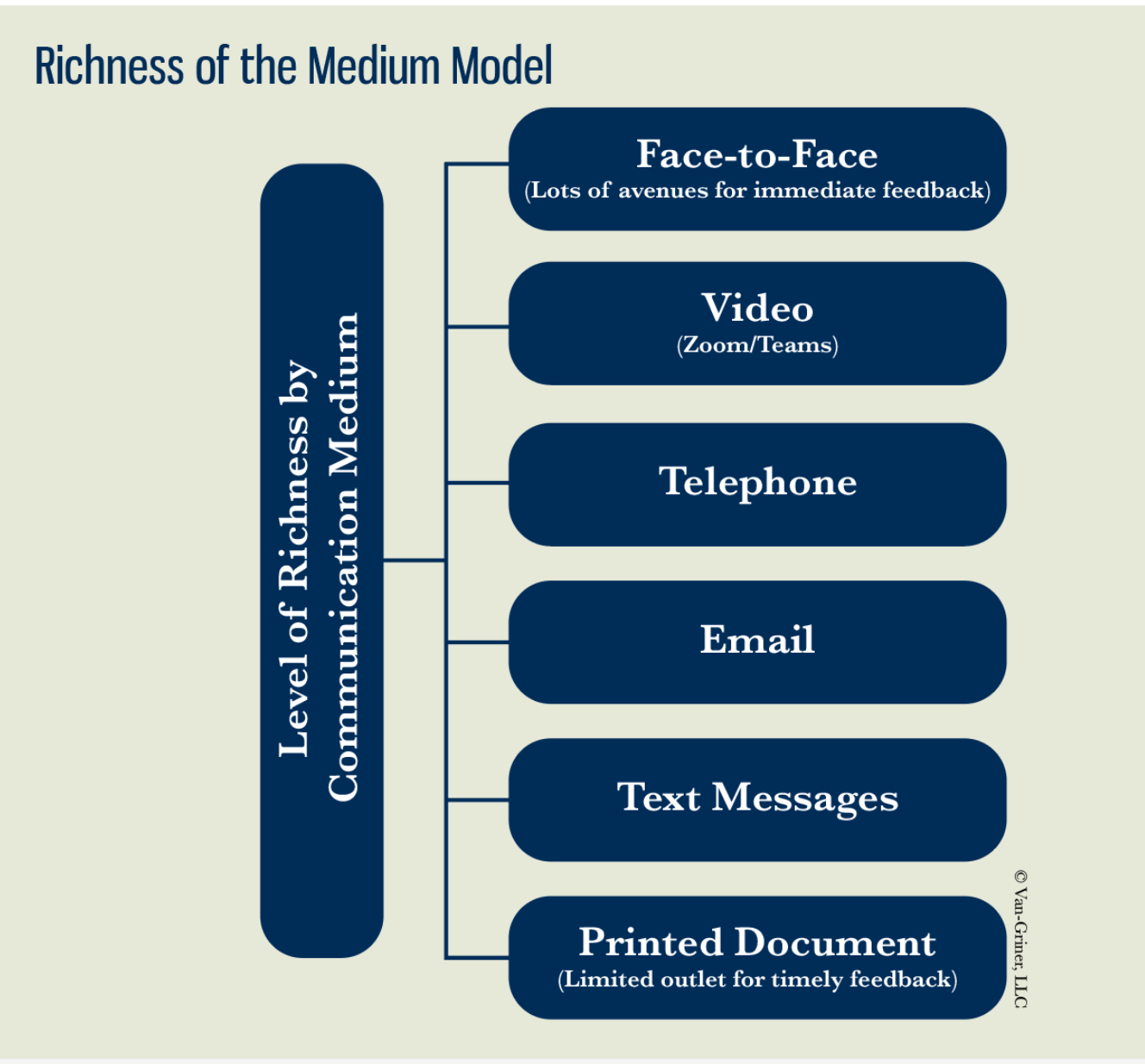
RICH + LEAN
- defines media richness as the ability to facilitate shared understanding within a time interval.
- In other words, the theory examines how mediums can enhance or detract from an intended message/meaning as well as encourage or discourage two-way communication (feedback).
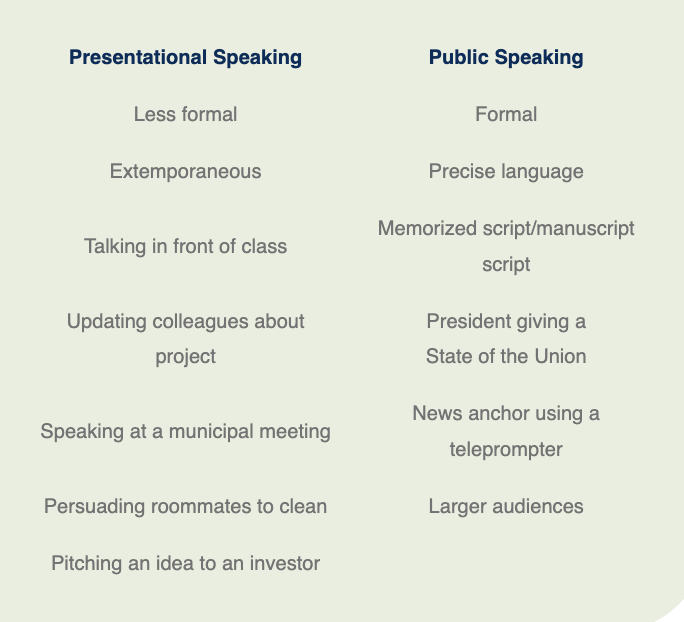
Presentational Speaking
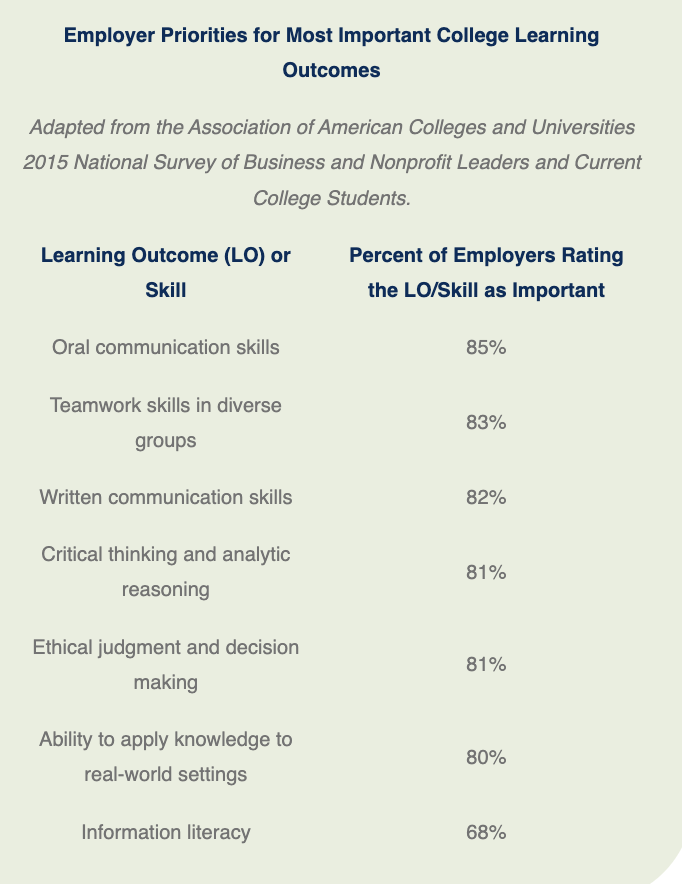
Over the course of the semester, we will address each of the learning outcomes/skills that was recognized as important by employers and AACU using some of the following examples:
- Oral communication skills will be taught during daily class activities and larger speaking assignments.
- Teamwork skills in diverse groups will be developed as you work on the group presentation project.
- Written communication skills will be honed during the process of preparing and organizing your presentations (e.g., outlining).
- You will demonstrate critical thinking and analytical reasoning while developing your message and deciding on supporting evidence.
- Ethical judgment will be practiced as you decide how to present information accurately and honestly (e.g., plagiarism).
- Real-world applications will be emphasized as we show the practicality of the content covered in this course and ask you to think about how often you communicate and how important these skills are to your academic, professional, home, and community lives.
- Information literacy skills will be practiced as you learn how to research and select credible information that supports your message.
Ethical Communication
Role
from audience analysis to accurate presentation of information
- For example, if you are preparing a presentation to support the idea that climate change is real and discover that only one of your audience members does not believe in climate change, then you may want to rethink your presentation topic. If you decide to go forward with your climate change topic, then it is unfair to single that audience member out during your presentation.
Plagiarism
is the act of using someone else’s words, ideas, organization, drawings, designs, illustrations, statistical data, computer programs, inventions or any creative work as if it were new and original to you; this includes real and intellectual property and public domain material. It is the buying or procuring of papers, cutting and pasting from works on the internet, not using quotation marks around direct quotes, paraphrasing and not citing original works, and it is having someone else write your paper or a substantial part of your paper and turning it in as if it were new and original to you. To avoid plagiarism, one must internalize, understand and reorganize material and make it one’s own.
(1) not using quotations correctly, (2) copying someone else’s work, (3) forgetting to cite sources in your paper or on the reference page, (4) deliberately doing so, (5) excessively helping someone on a paper, outline, or speech, or (6) recycling your old work
Artificial Intelligence
it is not clear what is wrong and right when it comes to AI. The key idea though, it that is should be used to assist. AI shouldn’t write presentations for you. it is unethical because it could create false information and it is not your work.